
Be Prepared: Your Go (and Stay) Bag Checklist
Having some supplies together can help you react more confidently when it matters most. Don’t worry, you don’t need to get everything together at once! Start with what you have, and, if possible – make it a shared project with a member of your support network.
Generally, there are two disaster responses you’ll want supplies for – Shelter-In-Place, or staying put (much more common), and evacuating. Fortunately, some materials overlap! You’ll also want to plan for your specific needs, including back-up power if needed for devices.
Build a Survival Document Portfolio (SDP)
First, you’ll want to put together a Survival Document Portfolio, or SDP – a waterproof envelope of your most important documents:
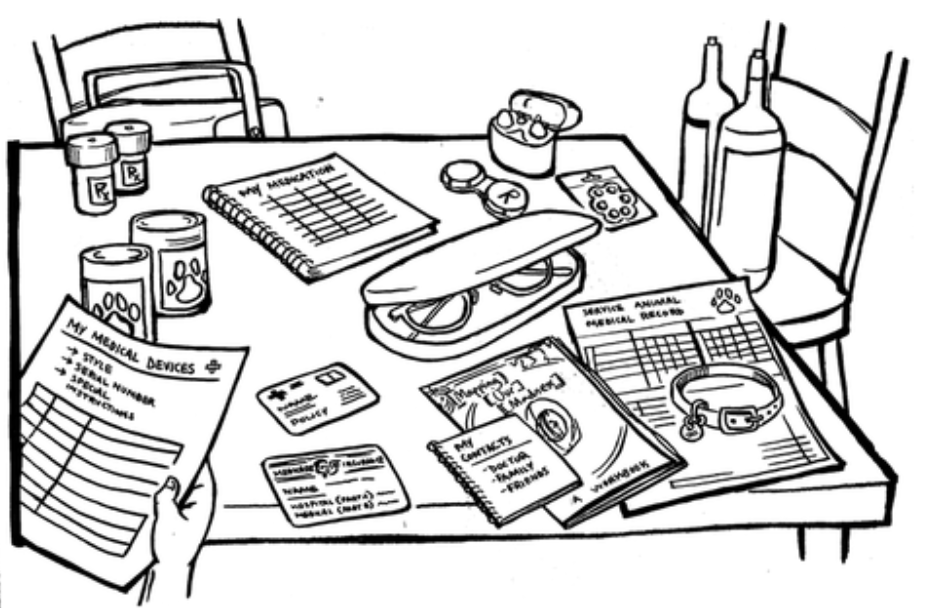
- Identification (birth certificate, passport, social security card, state or tribal ID, green card)
- Medical records including a list of all medications, dosage, any allergies, and insurance cards
- Emergency contact information for relatives, doctors, or friends who should be notified if you are hurt
- A list of the style and serial number of medical devices (include instructions for operating your equipment if needed)
- Numbers of local emergency services and map of evacuation routes
- Photos of pets/service animal, family, and friends for identifiers
Gather Your Supplies
Then, you’ll want to start getting your supplies together:
- Drinking water for at least 3 days for evacuation and 2 weeks for shelter-in-place. It’s a good idea to prepare 1 gallon of water per person/animal per day. Electrolyte packets can also come in handy.
- Non-perishable food for at least 3 days for evacuation and 2 weeks for shelter-in-place including protein, dried or canned fruits and vegetables, and starch. Plan lighter-weight foods (like jerky or fruit leather) for evacuation scenarios.
- A pocket knife and/or can opener for food prep
- At least a 1 week supply of prescription medications and a cooler and ice pack if they need refrigerated.
- A backup supply of oxygen, if needed
- Temperature regulation tools including cooling vests, ice packs, and battery powered fans
- Hand sanitizer, bleach tablets, alcohol wipes, antiseptic spray, etc. including moist towelettes, garbage bags, and plastic ties for personal sanitation
- Extra eyeglasses, contacts, hearing aids and batteries
- Pet food, extra water, collar with ID tag, medical records and other supplies for your service or emotional support animal
- Device charging cords and portable battery
- Battery-powered or hand crank radio that can receive NOAA weather alerts and extra batteries
- Flashlight or headlamp and extra batteries
- First aid kit and a whistle to signal for help
- An organic vapor mask (more effective at airborne chemical protection than N95-grade masks)
- Plastic and tape to seal off windows and any other openings and a non-sparking wrench or pliers to turn off utilities
- Local maps to navigate by
- A Mylar blanket and poncho for weathering the elements
Some more useful tips:
- Generally, try to stay in the habit of keeping your phone charged during the day and having at least ¼ tank of gas at all times.
- Remember to check expiration dates and refresh your supply every 6 months!
- Keep any back-up sources of power charged and make sure you test battery-powered devices every 6 months.
- Pack go bag specific supplies in a waterproof bag, if you have one.
- If there are go bag items that regularly live outside your pack (ex. ID, device chargers, etc) make a list and put it at the top of your go bag. You don’t want to be trying to remember these things if you need to leave fast!
- Practice your evacuation routes, with your pets if you can.
For more disability-specific Go Bag suggestions, go to: ready.gov/people-disabilities
Illustrations by Michelle Sayles